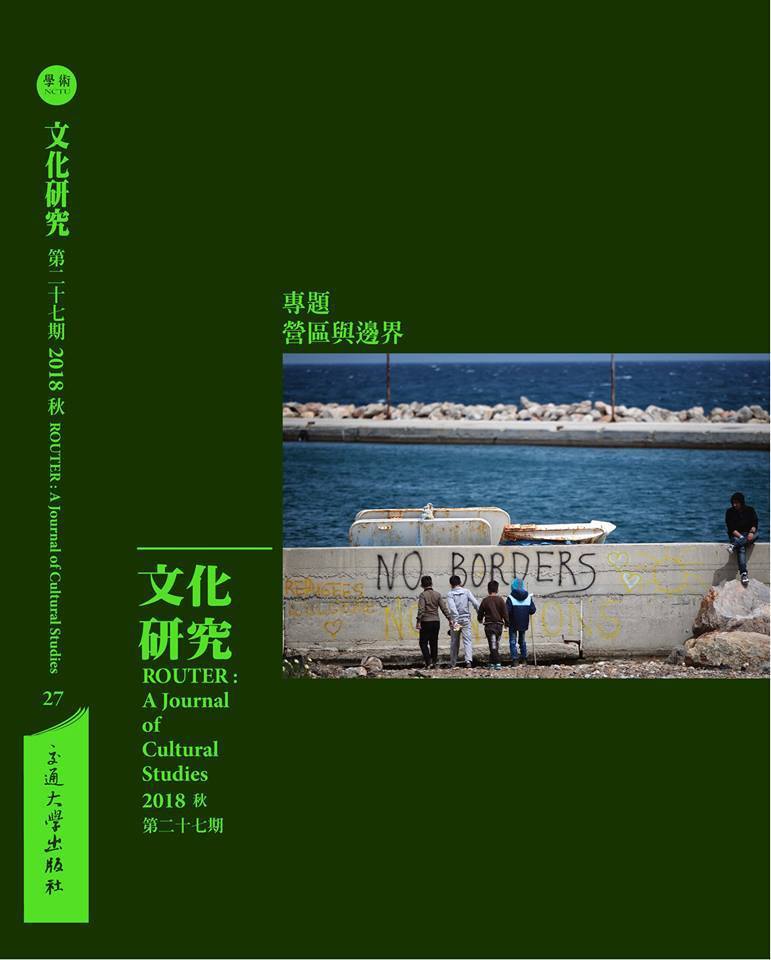
【新刊書訊】《文化研究》第二十七期 2018年秋季 專題:「營區與邊界」
【新刊書訊】《文化研究》第二十七期 2018年秋季 專題:「營區與邊界」
本刊為臺灣人文學核心期刊(THCI)與臺灣社會科學核心期刊(TSSCI),並獲2016-2017年科技部人文社會科學研究中心,人文社會科學期刊綜合類評比:第二級
本期專題「營區與邊界」由本刊編委清大社會所陳瑞樺教授協助規劃和推動,從法國思想家阿吉耶(Michel Agier)的兩篇思想翻譯─〈生命權力以其敏感形式來檢驗:當代異質空間民族誌計畫的簡要導論〉與〈製作不受歡迎者〉─出發,我們可以清楚看到阿吉耶是如何從「不受歡迎者的製造」這個命題上展開他的當代民族誌觀察,從而在難民問題上重新開發與整合傅科(Michel Foucault)與阿岡本(Giorgio Agamben)的思想視野。為了讓讀者對阿吉耶的思想有更充份的認識,我們邀請陳老師撰寫專題導言〈在共同世界的邊緣探問生命政治:阿吉耶的城市人類學與難民營研究〉,並製作了一份阿吉耶著作目錄。
專題還包括了四篇學術論文與三篇評論。趙中麒聚焦在難民營內的物質與社會佈局,來探究克倫難民如何在流亡中凝聚民族認同和維繫民族文化。潘美玲則討論流亡藏人如何在尼泊爾和印度的難民營區內透過毛衣與地毯的製作與貿易,建立自主自給的經濟收入,並藉之實踐西藏意識。洪伯邑和練聿修將我們的視野從難民和營區轉向「物」的跨界移動與變身,從而提供了另一個理解營區與邊界的方法。曾維龍藉著討論馬來亞西華人「動地吟」這個為期25年的詩歌朗誦活動,曾維龍指向了邊界性社群如何定義自身,介入當地社會的可能。三篇評論文章則為整個專題補充了更豐富的思想元素:洪世謙的書評深入了阿吉耶的思想、朱元鴻介紹了另一位值得敬重與懷念的思想家包曼(Zygmunt Bauman),柯能源的影評討論2016年獲得第66屆柏林影展金熊獎的紀錄片《海上焰火》(Fire at Sea, 2016)。
*文化研究學會會員贈書近日內將寄送,若需購買請洽國立交通大學出版社。
http://press.nctu.edu.tw/press-tea/books/2-2.aspx?sn=364
【目錄】
■編輯室報告:「例外之地」與「臨時之所」
■學術論文
■專題:「營區與邊界」
□緬甸克倫難民的文化實踐與民族主義運動 / 趙中麒
□在市場中實踐「西藏意識」:印度、尼泊爾流亡藏人的難民經濟 / 潘美玲
□「越」界臺茶:臺越茶貿易中的移動、劃界與本土爭辯 / 洪伯邑、練聿修
□馬來西亞「後茅草行動」的華社變遷:以「動地吟」詩人群體為個案討論 / 曾維龍
■批評與回應
在萬家墨面的時代:「動地吟」的文學行動 / 張錦忠
■研究議題與紀要
□馴化水,也要馴化人:臺北市自來水生飲計畫的面子工程與技術展演 / 王志弘、黃若慈
■思想翻譯:阿吉耶(Michel Agier)
□導言:在共同世界的邊緣探問生命政治:阿吉耶的城市人類學與難民營研究 / 陳瑞樺
□生命權力以其敏感形式來檢驗:當代異質空間民族誌計畫的簡要導論 / 阿吉耶著,陳瑞樺譯
□製作不受歡迎者 / 阿吉耶著,陳瑞樺譯
□阿吉耶著作目錄 / 曾嘉琦編,陳瑞樺校
■評論
■書評
□評阿吉耶的《邊界:邁向世界主義境況的人類學》/ 洪世謙
□紀念包曼:一位永遠的異鄉人評論家/ 朱元鴻
□影評
旁觀他人痛苦的影像倫理:《海上焰火》與生命蒙太奇/ 柯能源
Contents
Editorial: Exceptional Spaces, Tentative Locales
Academic Paper
Disquisition: Camps and Boundaries
Cultural Praxis and Nationalist Movement of
Myanmar Karen Refugees / Chung-Chi CHAO
Practicing “Tibetanness” in the Market Place:
Refugee Economy of Exiled Tibetans in India and Nepal/ Mei-Lin PAN
Mobility, Bordering, and the Contested Localness of
the Tea Trade between Taiwan and Vietnam/ Po-Yi HUNG, Yu-Hsiu LIENG
The Transition of Malaysian Chinese Society in “Post-Operasi Lalang” Era:
A Case Study on the ‟Dong Di Yin” Poetic Group/ Wen-Loong CHOU
Commentary and Reply
The Time of the Poor:
“Earth-Shaking Recitation” as Literary Activism/ Kim Tong TEE
Research Issue & Note
Domesticating Water, Domesticating Persons:
The Face-saving Project and Technological Performance of
Tap-water Drinking Programs in Taipei/ Chih-Hung WANG, Jo-Tzu HUANG
Translation: Michel Agier
Introduction: Inquiring about the Bio-Politics from the Edge of the Common World:
Michel Agier's Anthropology of City and Camp Study/ Jui-Hua CHEN
Michel Agier, “Le biopouvoir à l’épreuve de ses formes sensibles. Brève introduction à un projet d’ethnographies des hétérotopies contemporaines”
/ translated by Jui-Hua CHEN
Michel Agier, “La fabrique des indésirables”/ translated by Jui-Hua CHEN
Bibliography of Agier/ Chia-Chi TSENG, Jui-Hua CHEN
Commentary
Book Review
A Review on Michel Agier’s Borderlands: Towards an Anthropology of the
Cosmopolitan Condition / Shih-Chian HUNG
In Memory of Zygmunt Bauman: A Life of an ever Stranger-Critic
/ Yuan-Horng CHU
Film Review
Visual Ethics of Regarding the Pains of the Other:
The Montage of Life in Fire at Sea/ Neng-Yuan KO
Editorial statement
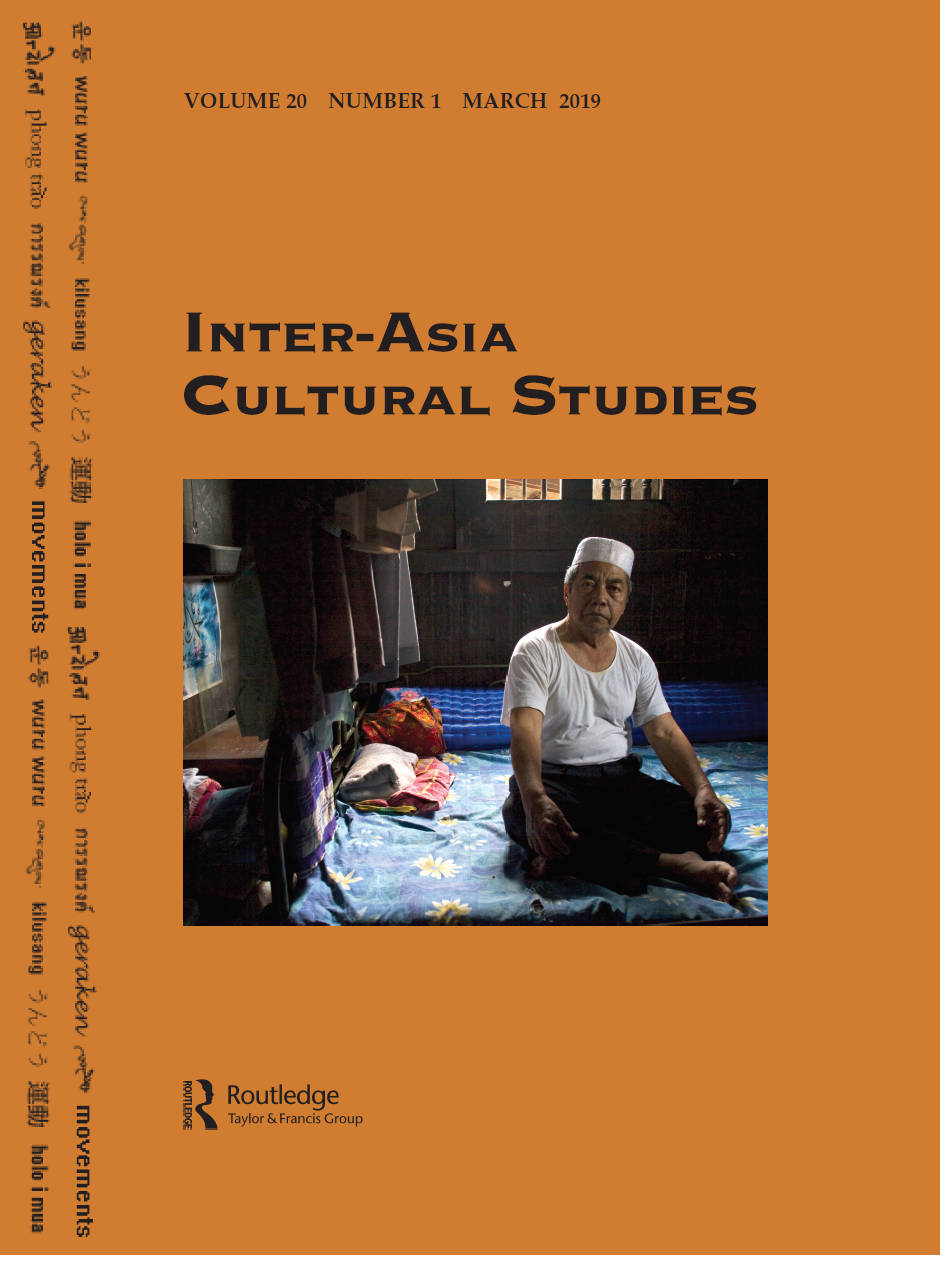
Inter-Asia Cultural Studies, also known as the Movements project, is a transborder collective undertaking to confront Inter-Asia cultural politics.
The question of culture is among the most important yet difficult facing Inter-Asia today. Prolonged histories of feudal ideology, patriarchy, heterosexism and, within as well as between countries, racism and discrimination against subjugated peoples continue to block struggles for popular democracy. Long-term complex-antagonisms generated by the uneven histories of global capitalism, colonialism and imperialism, the imposed nation-state structure and regressive forms of nationalist identity politics have rendered meaningful dialogues within the region very difficult. At the same time, the globalization and regionalization of technology, economy and cultural production, and the recent breakdown of the Cold War structure, have opened up a unique moment for dialogues within Asia and internationally. Unfortunately, this potentially generative moment has been met with triumphalist sentiment.
Since the 1980s, a pervasive rhetoric of the “rise of Asia” has come to mean more than the concentrated flow of capital into and out of the region. It has come to constitute a structure of feeling that is ubiquitous yet ambiguously felt throughout Asia. Historically, this feeling of the “rise of Asia” is complicated by the region’s colonial past. While Asia’s political, cultural and economic position in the global system will continue to fluctuate, there is a need to question and critique the rhetorical unities of both the “rise” and of “Asia.” Wealth and resources are unevenly distributed and there is no cultural or linguistic unity in this imaginary space called Asia. On the other hand, no matter whether there are common experiences shared by sub-regional histories, there is an urgent need for forging political links across these sub-regions. Hence, “inter-Asia” cultural studies.
The politico-economic transformations across the region in the Post Cold War era have engendered both new social movements and critical cultural studies as forces of decolonization. These forces have given rise to alternative modes of knowledge production, and yet no adequate means exists for the circulation of intellectual work and for interaction among critical intellectuals.
It is at such a pivotal conjuncture that Inter-Asia Cultural Studies has emerged as part of a movement for the ongoing construction and reconstruction of critical Inter-Asia subjectivities. It gives a long overdue voice to the intellectual communities in the region and recognizes its own existence as an attempt to continue critical lines of practices. The journal’s aim is to shift existing sites of identification and multiply alternative frames of reference: it is committed to publishing work not only out of “Asia” but also other coordinates such as the “third world.” Its political agenda is to move across: state/national/sub-regional divisions, scholarship and activism, modalities/forms of knowledge, and rigid identity politics of any form. These movements actively engage with local cultural politics within an ever-changing international environment, where politics is increasingly operating in the sphere of culture, under the dictates of a global cultural industry, mediated by new electronic and information technologies, and shaped by different forms of representation – visual, virtual, financial. This new situation has brought political economy, culture and politics together in different ways, and forced us to create new ways of thinking and acting. For this reason the project is more interested in generating new questions or finding ways of asking questions differently, than providing fixed answers.
Toward these ends, Inter-Asia Cultural Studies will serve as a link between critical intellectual groupings; we are actively building connections with journals and groups in different locales.
Kuan-Hsing Chen and Chua Beng Huat
-------------------
Inter-Asia Cultural Studies: Movements
Volume 20 Number 1 March 2019
Editorial statement
Essays
Reading Myanmar’s inland fisheries: postcolonial literature as theoretical lens
Stephen CAMPBELL
Fear as political dynamics: Chinese peasant workers’ struggle over social security
Wei SHI
Creative labor as moral and ethical subjects: Creativity City Yokohama, Japan
Changwook KIM
Autogenous culture as political form: explorations through participatory art in Singapore
Felicia LOW
Imagining accidental fetal citizens: pregnant Mainland women and the cultural politics of birthright citizenship
Tsung-yi Michelle HUANG, Chun-kai WOO, Yen-fu LAI
Is the postwar state melting down?: an East Asian perspective on post-Fukushima Japan
NAM Kijeong (translated by LEE Min Jeong, NAM Kijeong, Benjamin A. ENGEL)
Visual essay
Photography and Chineseness: reflections on Chinese Muslims in Indonesia
ZHUANG Wubin
Third-world connection
Yugoslavia: other modernities, other histories
Bojana PIŠKUR
Art education
Crisis of the human and responsibilities of art/education
GAO Shiming (translated by WANG Chih-ming)
Field note
Chongming islanders in great Shanghai: an investigation of cultural ecology
ZHU Shangje (translated by ZHU Qiaolian)
回顧 / 側記 Reviews / Notes
A thought crime in a hyper-royalist nation: Notes on Prof. Thongchai Winichakul’s lecture on the Lese Majesty law in Thailand
/ Show Ying Xin
After delivering his keynote speech at the International Conference of Cultural Studies Association on March 10, in which he, as a historian and a survivor of the 1976 Thammasat University massacre, gave a moving lecture about the unforgetting of the incident, Prof. Thongchai Winichakul turns to the contemporary social condition in Thailand in the lecture next day. He talks about the Lese Majesty law (hereafter LM), or Article 112, a law which seems to be an “exception” to the normative rule of law.
The LM law states that “Whoever defames, insults or threatens the King, the Queen, the Heir Apparent, or the Regent shall be punished with imprisonment of three years to fifteen years”. The number of LM charges has skyrocketed after the military coups in 2006 and 2014, which shows that this highly-controversial legal instrument has been used to suppress opponents and public expressions in the name of protecting Thai monarchy. Significantly, most people arrested for the crime confessed, even though all of them denied committing any wrongdoing, nor were they physically abused by the police.
Prof. Thongchai first traces the history of the LM law. In old Siam, when the state and the monarch were identical, LM was part of treason though it was less severe if compared to rebellion or defiance of the royal order. After the 1932 revolution which transformed Thailand into a nation of constitutional monarchy, LM was no longer seen as treason and criticism towards the monarchy was allowed if it was for public interests. Nevertheless, after the 1947 coup generated by the alliance between the military and the monarchists, the 1949 constitution stated clearly that the monarchy is inviolable. Article 112 in the new criminal code of 1957 thus made LM a crime against national security, no longer an offense to the monarch as a person. Since then, Thai politics and culture have been caught in the condition of what Prof. Thongchai describes as “hyper-royalism”, the permeation of royalism in everyday life which often involves exaggeration and exaltation.
After the coups in 2006 and 2014, LM has been abused to serve the purpose of the junta regime which is to intimidate and suppress the critics. Problematic interpretations of the law, unjust process and excessive punishments have made LM the most notorious thought crime in contemporary Thailand. Most violators are denied bail and would be detained during the police investigation for maximum of 84 days. Moreover, under the state of emergency (which was declared after every coup), LM cases will be heard, usually secretly, in the military court which is time-consuming and no appeal process is allowed. More terribly, the harsh sentence (the highest in history is seventy years in jail, for posting/sharing seven Facebook messages) compels the accused to confess as it will reduce the sentence by half.
According to his research, Prof. Thongchai notes that most of those charged for LM confessed to the crime not because of being physically tortured. Reduction of prison term after confession is one of the reasons, but Prof Thongchai argues that the terrible condition in Thai prison is probably the most decisive factor. However, scholars in criminology seem to neglect the fact that the ideas of “modern prison” are not necessarily applicable to prisons in many countries including Thailand. Also, legal culture and systems in Siam civilization were very much based on Hindu-Buddhist philosophy, and this only nation in Southeast Asia which had not been officially “colonized” undertook a rather different path from its counterparts in the transformation of a modern nation.
It is noteworthy that after the death of the late King Bhumibol in 2016 and the change of political situation in Thailand (an election to be held on 24 March, first in eight years), there were signs of changes regarding the LM charges as the number of arrests dropped off since early 2018. However, it is still too early to judge.